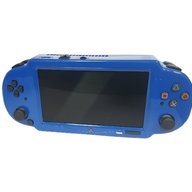

ᶦ ˢʷᵉᵃʳ ᶦˡˡ ᵃᶜᵗᵘᵃˡˡʸ ᶠᶦⁿᶦˢʰ ᵃ ᵖʳᵒʲᵉᶜᵗ ᵗʰᶦˢ ᵗᶦᵐᵉ ᵖˡˢ ᵈᵒⁿᵗ ʰᵘʳᵗ ᵐᵉ
It's that time of the year again! No procrastination allowed this time!
With the current uhh, political situation in the US, a couple of us folks in the Discord were cracking jokes about having to go back to hand wired projects for the summer contest because custom PCBs are too expensive to import from the usual places right now. Well, I decided to take those jokes way out of context and actually do a hand wired project for my entry, and what better system to do that with than the good ol' Atari 2600!
If any of you are familiar with Ben Heck (which, if you've been a part of this community for as long as a lot of us have, you should know who I'm talking about), you may be familiar with his Ben Heck Show episode on a hand wired Atari 2600 motherboard, which he eventually turned into a full portable in another episode. I think he did a fantastic job on this, but it's been almost 10 years since those two videos came out, and a lot has changed in the portablizing scene. While I totally could make a full custom PCB for this project and make it highly integrated with all the latest bells and whistles, but what's the fun in that? Let's go old school, with some modern twists to improve the overall usability and user experience!
After running a poll on the Discord, I decided on the name StellaNova (Stella being the Atari 2600 VCS codename, also means star in Latin, Nova meaning the birth of a new star. Get it? I thought it was cute at least...).
Feature set is as follows:
(1). I will settle for the original G-Boy's Tianma 3.5in 240p screen if the S-Video circuit and Lumadoub doesn't end up working out. The composite video output is not great, but it's good enough.
(2). I found this circuit online and I have absolutely no idea if it will work, but it seems promising. I've seen others implement it on custom PCBs, but I haven't seen anyone attempt a hand wired version yet.
(3). I may still use Lumadoub if the S-Video circuit doesn't work, since it can do composite input as well.
There's a lot of "ifs" hinging on me achieving the vision I have for this project, but I think I have a good set of backup plans in case things don't work out the way I hope. I'm taking things one step at a time, and trying to pace myself so I don't burn out at the beginning, which I think was the big issue I was having with previous years.
As for current progress, I started working on this project in the beginning of May, and first started by recreating the Atari 2600 cartridge in CAD as closely as I can to help model out a well functioning cartridge slot. I already released the model to the Model Repository, and so far it's proven very useful. I already pretty much have the shape of slot nailed, and after 1 or 2 test prints, cartridges insert and remove very smoothly.
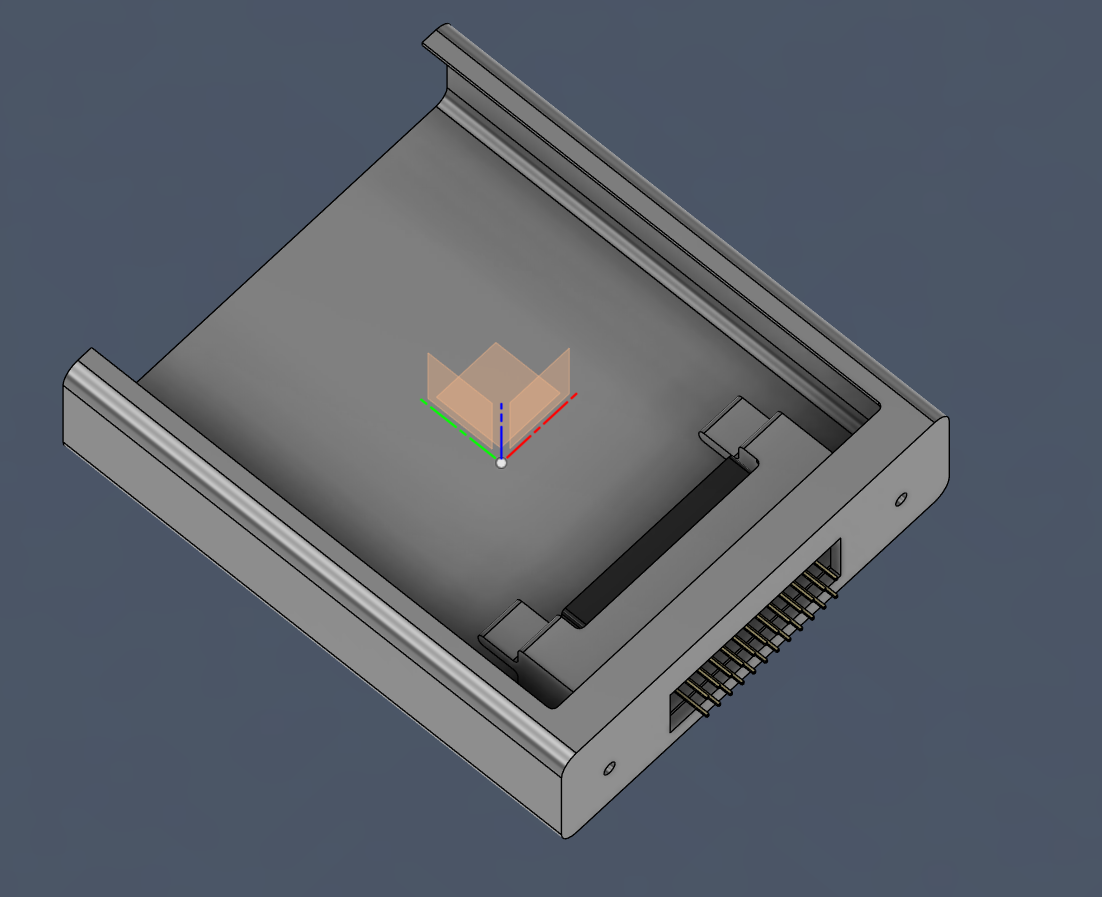
A big requirement I had when it came to the cartridge slot is that I wanted the cartridge to slot in from the top and be nearly flush with the unit, and I also wanted the label to be fully visible. I think this design nails these goals perfectly!
During this I was also trying to come up with a good solution for video output, as 240p video is a bit tricky to deal with using the screens that are most popular currently with the community. Most screens these days straight up won't accept anything less than 480p VGA video, and for a long time there wasn't really a good, low power & low latency way of upscaling 240p/480i content to be viewable on these displays. Enter Shank's LumaDoub project - an open source, low power, and lag free analog video encoder/decoder/line doubler. It can accept a variety of analog video standards in, and output a variety of analog video standards out. It's absolutely perfect for this project, with one issue: it's not released yet.
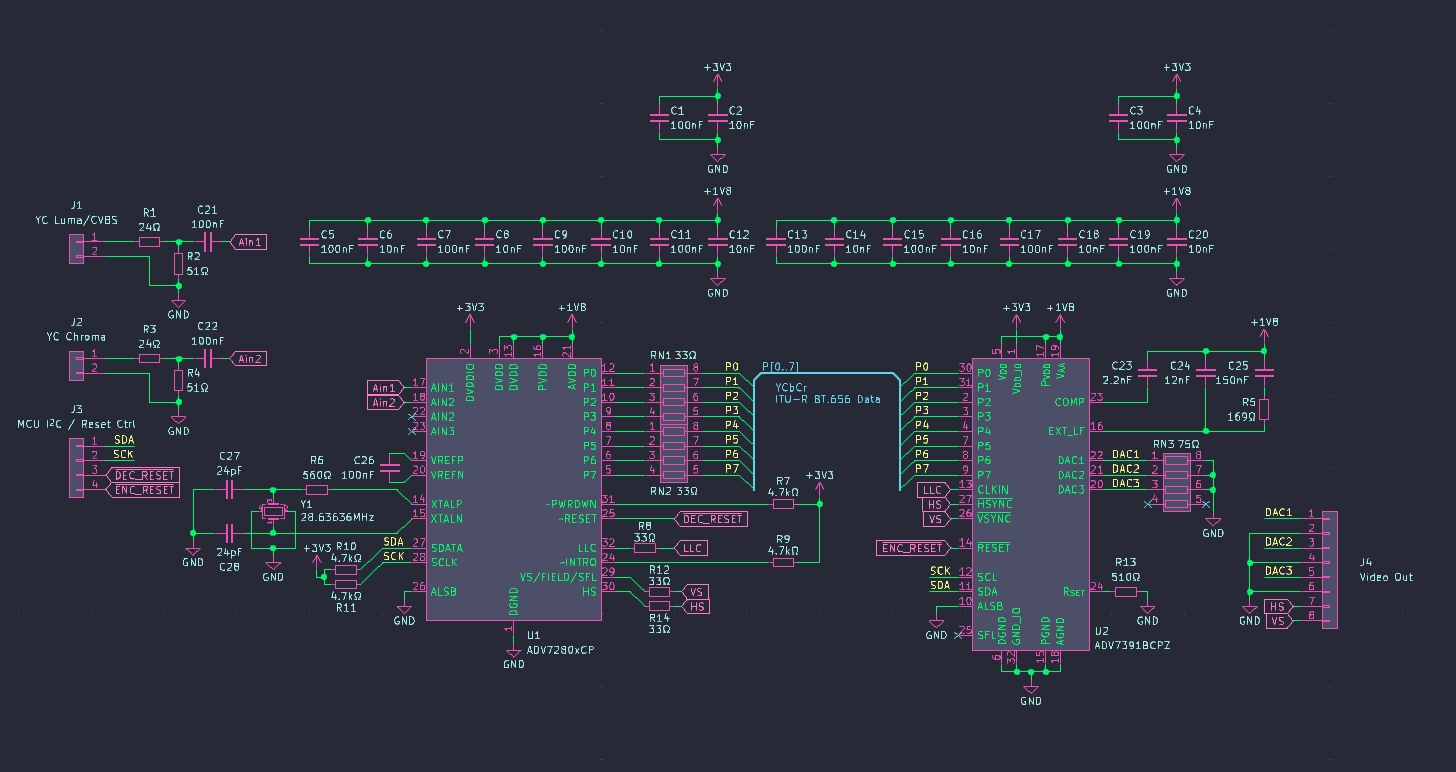
According to Shank, LumaDoub is feature complete, but just needs code cleanup & some spit shine before it's ready for prime time. Unfortunately, this would mean that I'm unable to use it for this contest until it gets released according to contest rules. However, Shank graciously decided to provide enough information on the Discord for anyone to be able to implement a basic version of LumaDoub on their own before release! The actual hardware design was pretty simple, it just requires a very specific i2c initialization routine, which he graciously shared with the class, enough to get CVBS/S-Video to 480p VGA up and running! Armed with the knowledge to perform great acts of sorcery, I set off to design the schematic, and came up with something that I'm pretty pleased with!
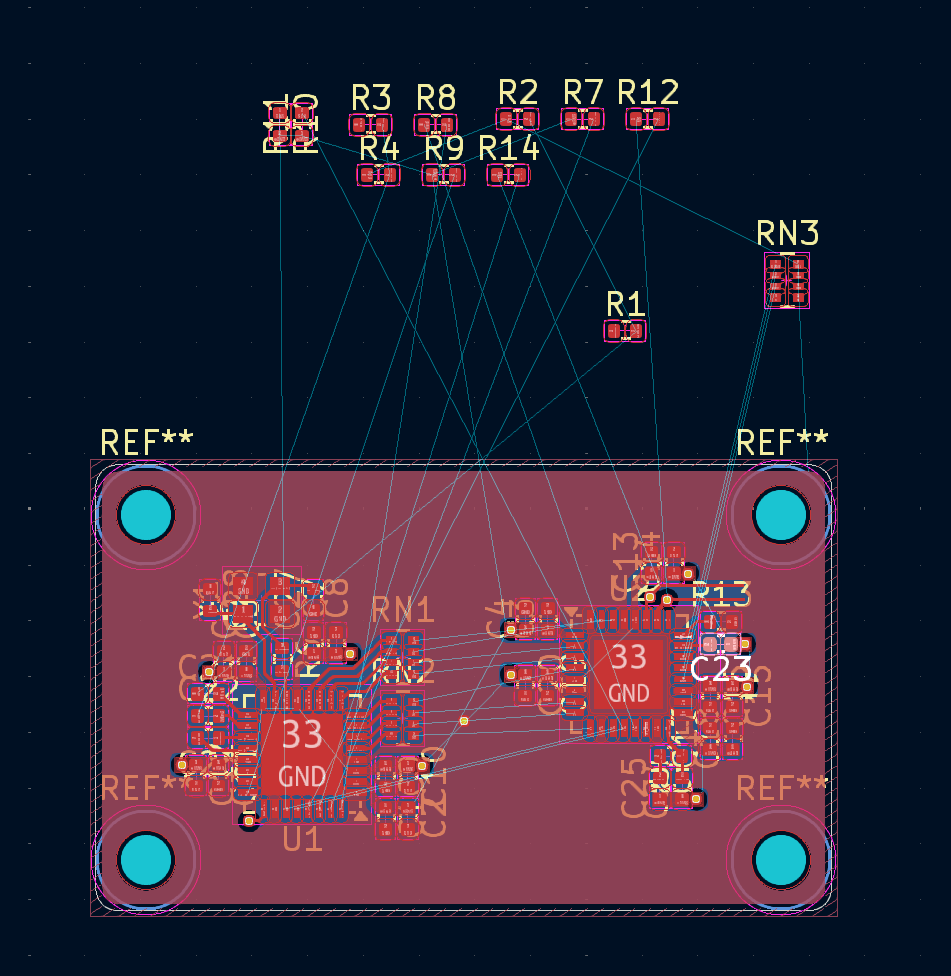
I also got started on the board routing, but haven't finished yet. My plans are to order this from Aisler using their 0.8mm ENIG service, which right now has a coupon for $20 off, so the boards are basically free at the price I was quoted!
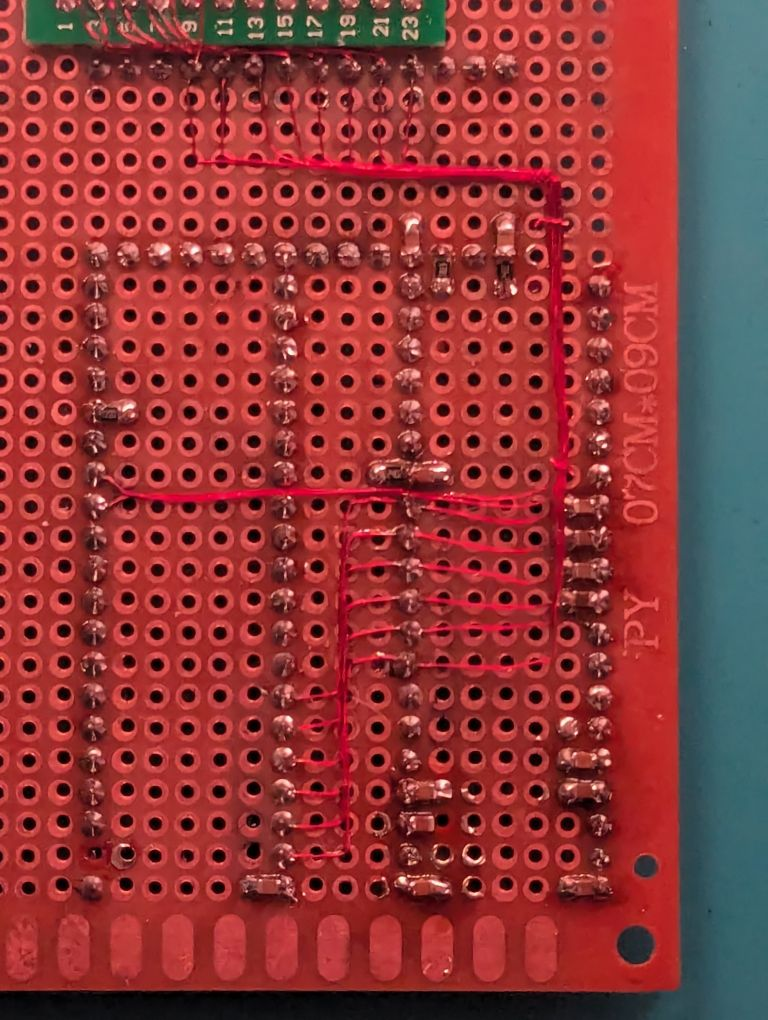
Finally, once I got some of the necessary parts in from Amazon, I got started soldering the Atari board. I went with a chip layout very similar to Ben's original design, but I'll be doing all the routing my own way to try and keep things as clean as possible. So far I finished the whole data bus, and started laying out some of the basic passives. I still have quite a bit of work to do on this!
And that's all for now! I hope you all enjoyed the first post on this journey to greatness! I'm very much looking forward to continue working on this in the coming months! Stay tuned!
It's that time of the year again! No procrastination allowed this time!
With the current uhh, political situation in the US, a couple of us folks in the Discord were cracking jokes about having to go back to hand wired projects for the summer contest because custom PCBs are too expensive to import from the usual places right now. Well, I decided to take those jokes way out of context and actually do a hand wired project for my entry, and what better system to do that with than the good ol' Atari 2600!
If any of you are familiar with Ben Heck (which, if you've been a part of this community for as long as a lot of us have, you should know who I'm talking about), you may be familiar with his Ben Heck Show episode on a hand wired Atari 2600 motherboard, which he eventually turned into a full portable in another episode. I think he did a fantastic job on this, but it's been almost 10 years since those two videos came out, and a lot has changed in the portablizing scene. While I totally could make a full custom PCB for this project and make it highly integrated with all the latest bells and whistles, but what's the fun in that? Let's go old school, with some modern twists to improve the overall usability and user experience!
After running a poll on the Discord, I decided on the name StellaNova (Stella being the Atari 2600 VCS codename, also means star in Latin, Nova meaning the birth of a new star. Get it? I thought it was cute at least...).
Feature set is as follows:
- Hand wired Atari 2600 motherboard featuring chips pulled from an Atari 2600 Junior console. No emulation here!
- 1x 4000mAh 18650 battery - I have yet to do battery life calculations, but even this should yield significant battery life
- USB-C PD charging (5V3A) with an off the shelf BQ25606 based battery charger module
- 3.5in Screen - ideally the 3.5in 640x480 IPS (1)
- Highest quality video output possible w/o FPGA based mods using a custom S-Video circuit (2)
- Shank's Lumadoub for upscaling the 240p S-Video(3) output to 480p VGA
- Ideally, the final build will not be much bigger than a cartridge itself
(1). I will settle for the original G-Boy's Tianma 3.5in 240p screen if the S-Video circuit and Lumadoub doesn't end up working out. The composite video output is not great, but it's good enough.
(2). I found this circuit online and I have absolutely no idea if it will work, but it seems promising. I've seen others implement it on custom PCBs, but I haven't seen anyone attempt a hand wired version yet.
(3). I may still use Lumadoub if the S-Video circuit doesn't work, since it can do composite input as well.
There's a lot of "ifs" hinging on me achieving the vision I have for this project, but I think I have a good set of backup plans in case things don't work out the way I hope. I'm taking things one step at a time, and trying to pace myself so I don't burn out at the beginning, which I think was the big issue I was having with previous years.
As for current progress, I started working on this project in the beginning of May, and first started by recreating the Atari 2600 cartridge in CAD as closely as I can to help model out a well functioning cartridge slot. I already released the model to the Model Repository, and so far it's proven very useful. I already pretty much have the shape of slot nailed, and after 1 or 2 test prints, cartridges insert and remove very smoothly.
A big requirement I had when it came to the cartridge slot is that I wanted the cartridge to slot in from the top and be nearly flush with the unit, and I also wanted the label to be fully visible. I think this design nails these goals perfectly!
During this I was also trying to come up with a good solution for video output, as 240p video is a bit tricky to deal with using the screens that are most popular currently with the community. Most screens these days straight up won't accept anything less than 480p VGA video, and for a long time there wasn't really a good, low power & low latency way of upscaling 240p/480i content to be viewable on these displays. Enter Shank's LumaDoub project - an open source, low power, and lag free analog video encoder/decoder/line doubler. It can accept a variety of analog video standards in, and output a variety of analog video standards out. It's absolutely perfect for this project, with one issue: it's not released yet.
According to Shank, LumaDoub is feature complete, but just needs code cleanup & some spit shine before it's ready for prime time. Unfortunately, this would mean that I'm unable to use it for this contest until it gets released according to contest rules. However, Shank graciously decided to provide enough information on the Discord for anyone to be able to implement a basic version of LumaDoub on their own before release! The actual hardware design was pretty simple, it just requires a very specific i2c initialization routine, which he graciously shared with the class, enough to get CVBS/S-Video to 480p VGA up and running! Armed with the knowledge to perform great acts of sorcery, I set off to design the schematic, and came up with something that I'm pretty pleased with!
I also got started on the board routing, but haven't finished yet. My plans are to order this from Aisler using their 0.8mm ENIG service, which right now has a coupon for $20 off, so the boards are basically free at the price I was quoted!
Finally, once I got some of the necessary parts in from Amazon, I got started soldering the Atari board. I went with a chip layout very similar to Ben's original design, but I'll be doing all the routing my own way to try and keep things as clean as possible. So far I finished the whole data bus, and started laying out some of the basic passives. I still have quite a bit of work to do on this!
And that's all for now! I hope you all enjoyed the first post on this journey to greatness! I'm very much looking forward to continue working on this in the coming months! Stay tuned!
Last edited: