

- Joined
- Jan 31, 2016
- Messages
- 1,372
- Likes
- 2,968
- Portables
- 6
ALL INFORMATION UNCONFIRMED. ATTEMPT AT YOUR OWN RISK
Its believed to be unlikely that the gamecube video encoders could work on the wii.
But you know, I don't really like accepting no as an answer, so I'v been looking into it with my oscilloscope.
Its nothing guaranteed, and very early stages, but I believe its possible the two use the same encoding. These results are not verified as official bitbuilt information, but simply personal tests I have run using my oscilloscope.
Here is my first test:
Wiiflow Main menu
Composite 480i
No sound
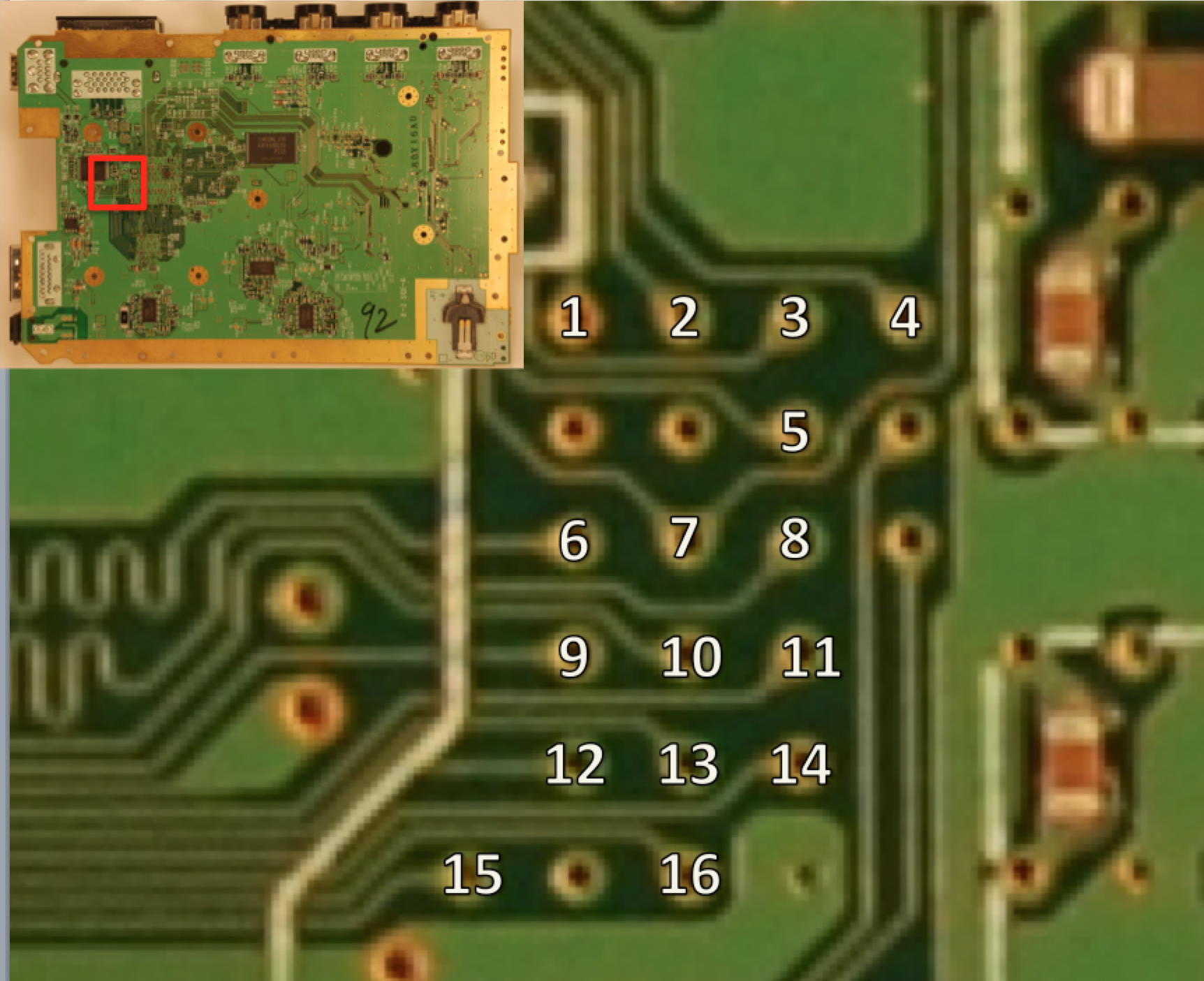
Via 1: 20.9 microsecond period 0v-1.81v perfect square wave (50kHz)
Via 2: 0v No activity unless sound is made.
Via 3: 82 nanosecond period 0v to 1.75v (12.19 mHz)
Via 4: 324 nanosecond period 0v to 1.84v (3.08641 mHz)
Via 5: 0v no activity
Via 6: Digital Data, 74ns multiples peak to peak. 0v to 1.8v (13.5mhz)
Via 7: 0v no activity
Via 8: Digital Data, 74ns multiples peak to peak. 0v to 1.8v (13.5mhz)
Via 9: 18.2 Nanosecond period, perfect sine wave of .6v to 1.2v (54mHz)
Via 10: 148 nanoseconds period, 0v to 1.83v (6.75mHz)
Via 11: Digital Data, 74ns multiples peak to peak. 0v to 1.8v (13.5mhz)
Via 12: Digital Data, 74ns multiples peak to peak. 0v to 1.8v (13.5mhz)
Via 13: Digital Data, 74ns multiples peak to peak. 0v to 1.8v (13.5mhz)
Via 14: Digital Data, 74ns multiples peak to peak. 0v to 1.8v (13.5mhz)
Via 15: Digital Data, 74ns multiples peak to peak. 0v to 1.8v (13.5mhz)
Via 16: Digital Data, 74ns multiples peak to peak. 0v to 1.8v (13.5mhz)
Based off of this test:
Just like the gamecube ave, this has 8 digital video lines and a 54mhz clock. Im not saying its a fish, but it certainly smells fishy
Its believed to be unlikely that the gamecube video encoders could work on the wii.
But you know, I don't really like accepting no as an answer, so I'v been looking into it with my oscilloscope.
Its nothing guaranteed, and very early stages, but I believe its possible the two use the same encoding. These results are not verified as official bitbuilt information, but simply personal tests I have run using my oscilloscope.
Here is my first test:
Wiiflow Main menu
Composite 480i
No sound
Via 1: 20.9 microsecond period 0v-1.81v perfect square wave (50kHz)
Via 2: 0v No activity unless sound is made.
Via 3: 82 nanosecond period 0v to 1.75v (12.19 mHz)
Via 4: 324 nanosecond period 0v to 1.84v (3.08641 mHz)
Via 5: 0v no activity
Via 6: Digital Data, 74ns multiples peak to peak. 0v to 1.8v (13.5mhz)
Via 7: 0v no activity
Via 8: Digital Data, 74ns multiples peak to peak. 0v to 1.8v (13.5mhz)
Via 9: 18.2 Nanosecond period, perfect sine wave of .6v to 1.2v (54mHz)
Via 10: 148 nanoseconds period, 0v to 1.83v (6.75mHz)
Via 11: Digital Data, 74ns multiples peak to peak. 0v to 1.8v (13.5mhz)
Via 12: Digital Data, 74ns multiples peak to peak. 0v to 1.8v (13.5mhz)
Via 13: Digital Data, 74ns multiples peak to peak. 0v to 1.8v (13.5mhz)
Via 14: Digital Data, 74ns multiples peak to peak. 0v to 1.8v (13.5mhz)
Via 15: Digital Data, 74ns multiples peak to peak. 0v to 1.8v (13.5mhz)
Via 16: Digital Data, 74ns multiples peak to peak. 0v to 1.8v (13.5mhz)
Based off of this test:
Just like the gamecube ave, this has 8 digital video lines and a 54mhz clock. Im not saying its a fish, but it certainly smells fishy
Last edited: