Question Speakers too loud

Speakers are too loud

  • You can solve problem using resistors

    Votes: 2 66.7%
  • I’m not sure need more info

    Votes: 1 33.3%

  • Total voters
    3
Joined
Jan 10, 2018
Messages
99
Likes
47
Portables
1
I just wired up some speakers that I got to an amplifier, and there is a problem. They seem to be overly loud even near the lowest volume level. Every once in a while they make a pop noise like their working too hard. I think I can solve that with some resistors, but what type?

Btw the speakers are .5 Watts more than the speakers it came with.
 
Which amp are you using?

You could lower the input-level using a resistor/potentiometer connected to ground & audio-input of the amp. But that might not be a sufficient solution..
 
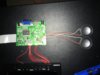
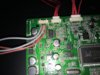
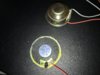
Can you post links to the amp and the speakers in question? A photo of your wiring would also help.
 
As @MasterNate said, the speakers and amplifier Ohm must match. If the speakers have a lower Ohm level it will sound more loudly but it can (and probably will) destroy your amp
 
Can you post links to the amp and the speakers in question? A photo of your wiring would also help.
The amp I’m using is part of a screen. It originally came with 1 8ohm 1.5 watt wired but I saw that I could wire another one for stereo sound. My speakers both say 8ohm 2 watt.... I think it has something to do with speaker impedance and the 1 speaker I added. The amp is SL7299.
 

Attachments

  • 3DF5D97C-3DD4-4988-A655-DF91AE2271A9.jpeg
    3DF5D97C-3DD4-4988-A655-DF91AE2271A9.jpeg
    1.9 MB · Views: 355
  • A7303D67-6034-4469-8CA2-9F3BE545E1C7.jpeg
    A7303D67-6034-4469-8CA2-9F3BE545E1C7.jpeg
    2.2 MB · Views: 413
  • 0957FE50-B575-418D-8831-FD9A31D0AFFC.jpeg
    0957FE50-B575-418D-8831-FD9A31D0AFFC.jpeg
    3.8 MB · Views: 357
  • 73B39C1D-ABFC-47FD-B36C-2004A6FE49BD.jpeg
    73B39C1D-ABFC-47FD-B36C-2004A6FE49BD.jpeg
    433.6 KB · Views: 383
I second resistor to ground. That's how volume knobs on guitars work, but with a potentiometer. You may want to use a potentiometer to see what resistance is ideal, then swap it out for a resistor of said value.
 
So, what exactly should I do here? 1 resistor connected to ground from what? For each speaker?
 
Place one 4 ohm resistor in series with each speaker and report back to us.

Doing this should lower the voltage across the speaker and reduce the total driving current, bringing the signals to your speakers in a range that the speakers can handle.
 
I decided to run a few tests before I added the resistors and when I took one speaker off, the other one worked perfectly!:D I decided I didn’t really need stereo sound anyways... But the quality of the upgraded speaker is worlds better than the one the screen came with. Thanks for all the help everyone.:)
 
I decided to run a few tests before I added the resistors and when I took one speaker off, the other one worked perfectly!:D I decided I didn’t really need stereo sound anyways... But the quality of the upgraded speaker is worlds better than the one the screen came with. Thanks for all the help everyone.:)

This sounds like your amp is not receiving enough input current to drive the speakers. What gauge wire are you using for your power rails? (I personally use 22 guage)
 
This sounds like your amp is not receiving enough input current to drive the speakers. What gauge wire are you using for your power rails? (I personally use 22 guage)
The amp is surface mounted to a screen motherboard. The power supply for the screen is 12v 1amp.
 
Ok, what guage of wire are you using?

12v 1 amp may not be enough for the display combined with the amp.
 
That power supply can supply up to about 12 watts. That is definitely enough for the screen, amp, and speakers. Unless you are using some ridiculously high power speakers.
 
I dont care if the power supply was made by God and can supply a billion watts. If the wires connecting the supply to the load do not have a high enough current carring capacity for the total load current, one, some, or all of the devices that make up the total load will have a lower input current than the load requires for normal rated operation. This will cause the performance of one, some, or all of the load devices to suffer. Some effected loads may be unable to operate at all, and some of the effected loads may operate below the manufacturer's ratings.

The audio amp in question was able to operate closer to normal parameters when a load was disconnected from it. This suggests that the amp did not have enough input current to divide across its loads while still driving them at normal parameters. An increase in input current should result in an increase in current divided across the loads, driving them at normal parameters.

Try powering a Pi 3 with a 2.4 amp usb port power brick. Sure, the power brick can supply enough power, but if you try to use a normal usb cable your Pi will be uncurrented. Why? The normal usb cable is not rated for 2.4 amps, because its wires are too small.

 
Last edited:
I understand the wire gauge problem, but you made it sound like it might be a problem with the power supply not being able to supply enough watts. I was just clarifying it for anybody reading this thread who may be confused.

And yes, wire gauge for power should be 22 gauge or larger. I normally use 20 gauge.
 
I dont care if the power supply was made by God and can supply a billion watts. If the wires connecting the supply to the load do not have a high enough current carring capacity for the total load current, one, some, or all of the devices that make up the total load will have a lower input current than the load requires for normal rated operation. This will cause the performance of one, some, or all of the load devices to suffer. Some effected loads may be unable to operate at all, and some of the effected loads may operate below the manufacturer's ratings.

The audio amp in question was able to operate closer to normal parameters when a load was disconnected from it. This suggests that the amp did not have enough input current to divide across its loads while still driving them at normal parameters. An increase in input current should result in an increase in current divided across the loads, driving them at normal parameters.

Try powering a Pi 3 with a 2.4 amp usb port power brick. Sure, the power brick can supply enough power, but if you try to use a normal usb cable your Pi will be uncurrented. Why? The normal usb cable is not rated for 2.4 amps, because its wires are too small.
I’m using the stock power supply the screen came with and I’m not sure the gauge it has. Later, when I wire power to the screen from my power source, I will make sure to use some thicker gauge wire.
 
Back
Top