
- Joined
- Jun 25, 2021
- Messages
- 41
- Likes
- 176
Hi all,
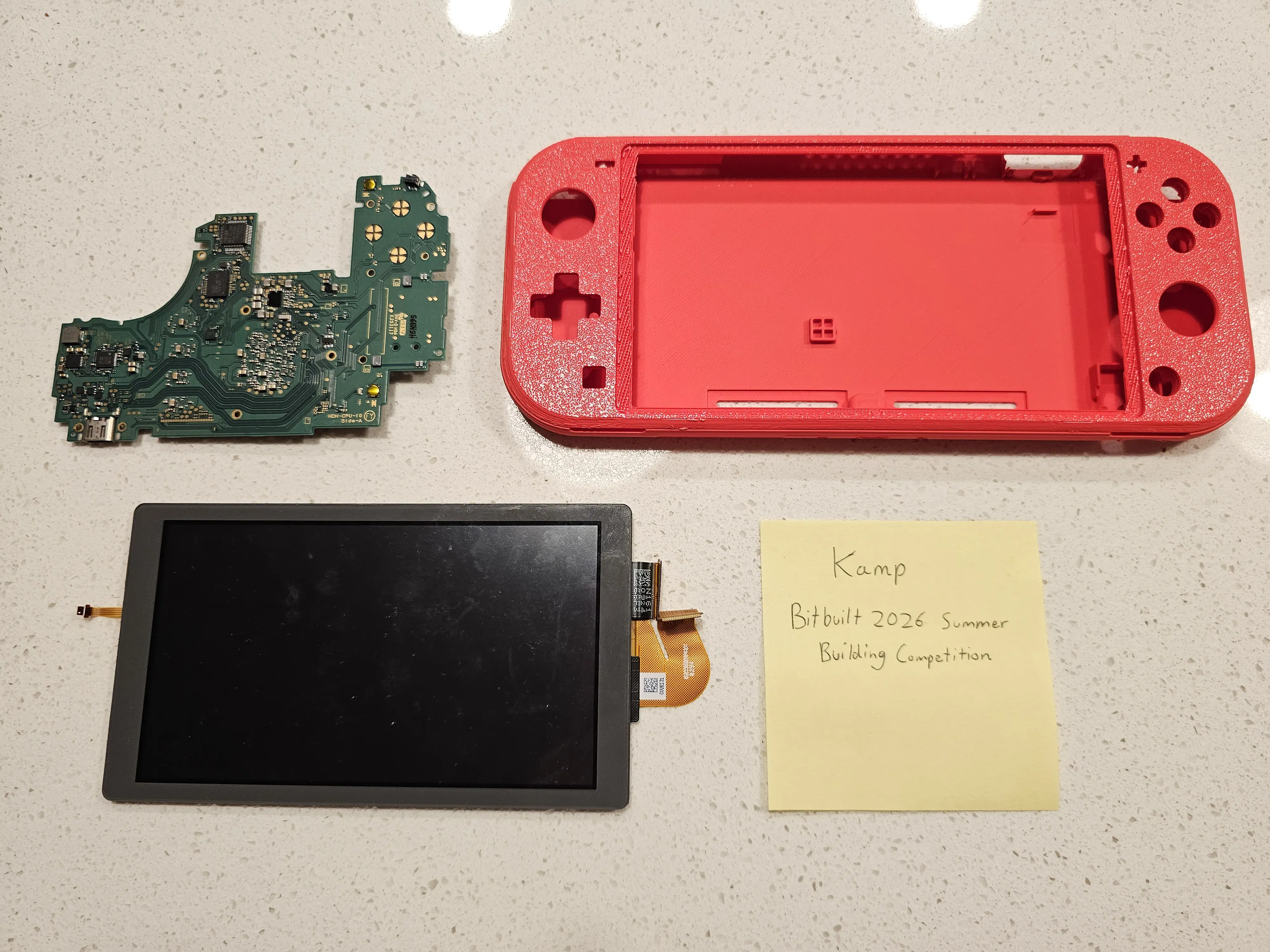
This year, I'll be working on a more modern console than I’m used to: the Switch Lite.
I plan to call it either the Switch Lite SP, or the Switch DS Lite
I plan to redesign the console to fit into a clamshell style handheld:
My goal is to have a design that:
This project will mostly focus on the mechanical CAD adaptation, and a few adapter PCBs.
To start, I decided to recreate the Switch Lite parametrically, so that I could easily adapt it to my needs. I leveraged Wesk’s amazing 3D scans to assist with my hand measurements:
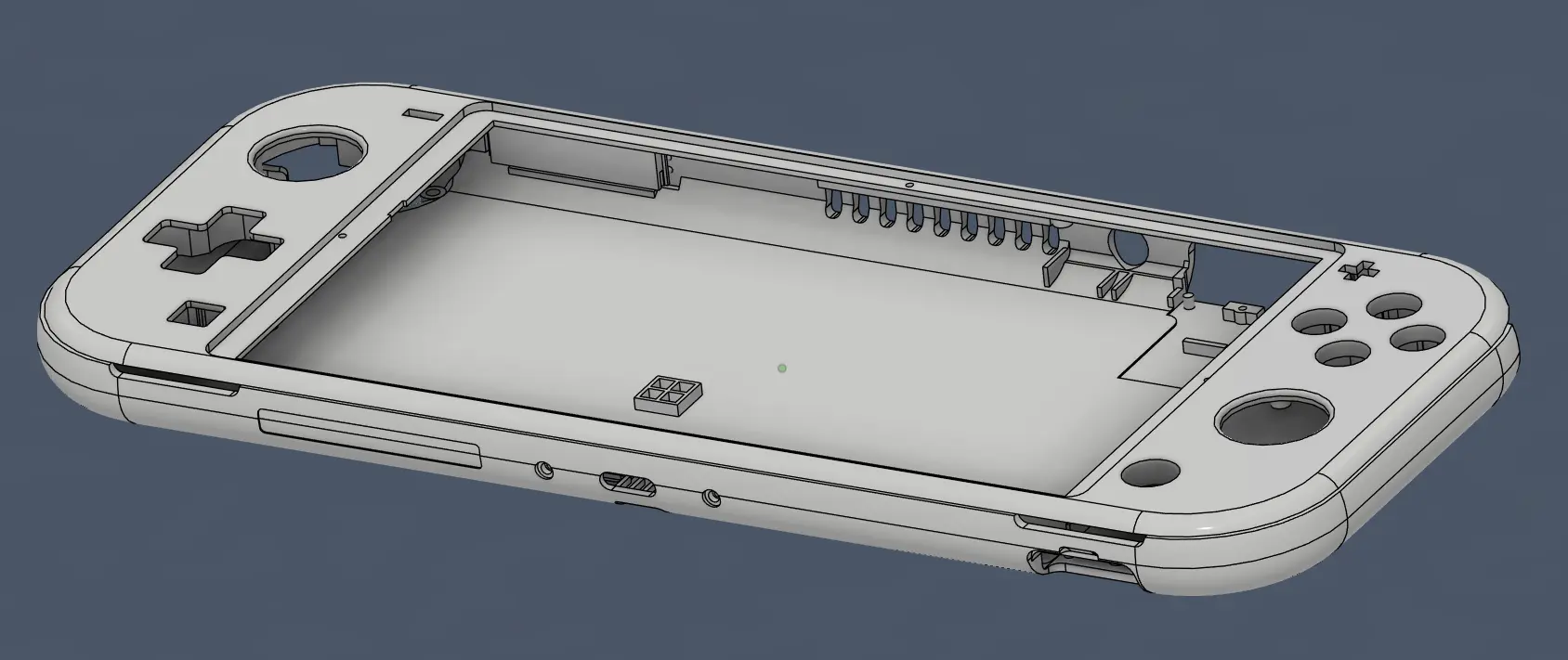
With that done, I started modeling some of the other components that would end up determining the overall dimensions. By far the most constraining are the display and the battery.
The OEM Switch Lite is laid out with the mainboard on the right side of the system, stacked with the fan and heat pipes, with the battery to the right of that, and a simple button PCB furthest right:
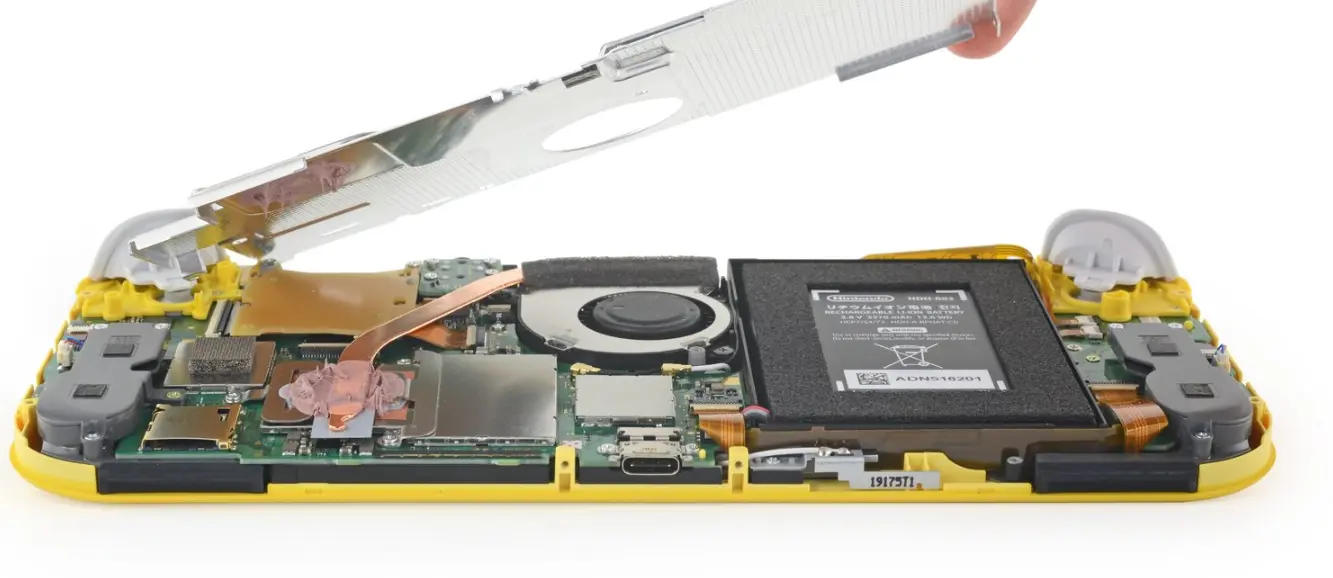
Source: Ifixit Switch Lite Teardown
I decided to move the battery to ‘below’ the main board (between where the main board and the screen would be) and cut out that length of shell to reduce the overall size. This would reduce the length by ~55mm, but the length of the screen and my goal to keep the rounded corners of the switch lite mean that I can only reduce the length by about 40mm.
Moving the battery in this way results in an increased thickness of about 7mm. This might seem undesirable, but I want to go with the embedded joycon thumbstick design of some recent folding portables. The increased thickness will help make space for the sticks.
This arrangement also increases the space between the face where the buttons are pressed and where the actual button contacts on the PCB rest. For the Main board buttons (the face buttons, plus, and home), I’ll just extend the buttons downward with 3D prints. For the left side buttons (Dpad, minus, and capture), I’ll be creating some custom PCBs that are split up to better match the new locations.
The reduced length leaves no space for the Volume and Power buttons on the upper left, so these will be moved to either the left side, or to above the cartridge slot/fan exhaust.
The upper clamshell will be pretty simple, aside from the hinge. The display has 3 FFCs that I’ll need to bring through the hinge: The digitizer/NFC FFC, the display FFC, and the backlight FFC.
I’m planning another custom PCB that has connectors for all of these FFCs (and maybe for the speakers). I’ll need to length match at least the 5 MIPI lanes on the display FFC, but I’ll likely have space to length match all of the digitizer/NFC and display FFC traces. Each FFC will be routed on their own FFC or custom Flex PCB through the hinge to the connection points on the Mainboard (button board for the backlight).
The hinge will be a mix between the GBA SP design, in that the flexes will route through the middle of the hinge and be covered by another simple shell part, the N2DS XL, and the N3DS XL.
Here’s what I have so far! I’m sure there’s a lot that I’ve described that isn’t straight forward, so hopefully the vision will become clear once I get some more work done:
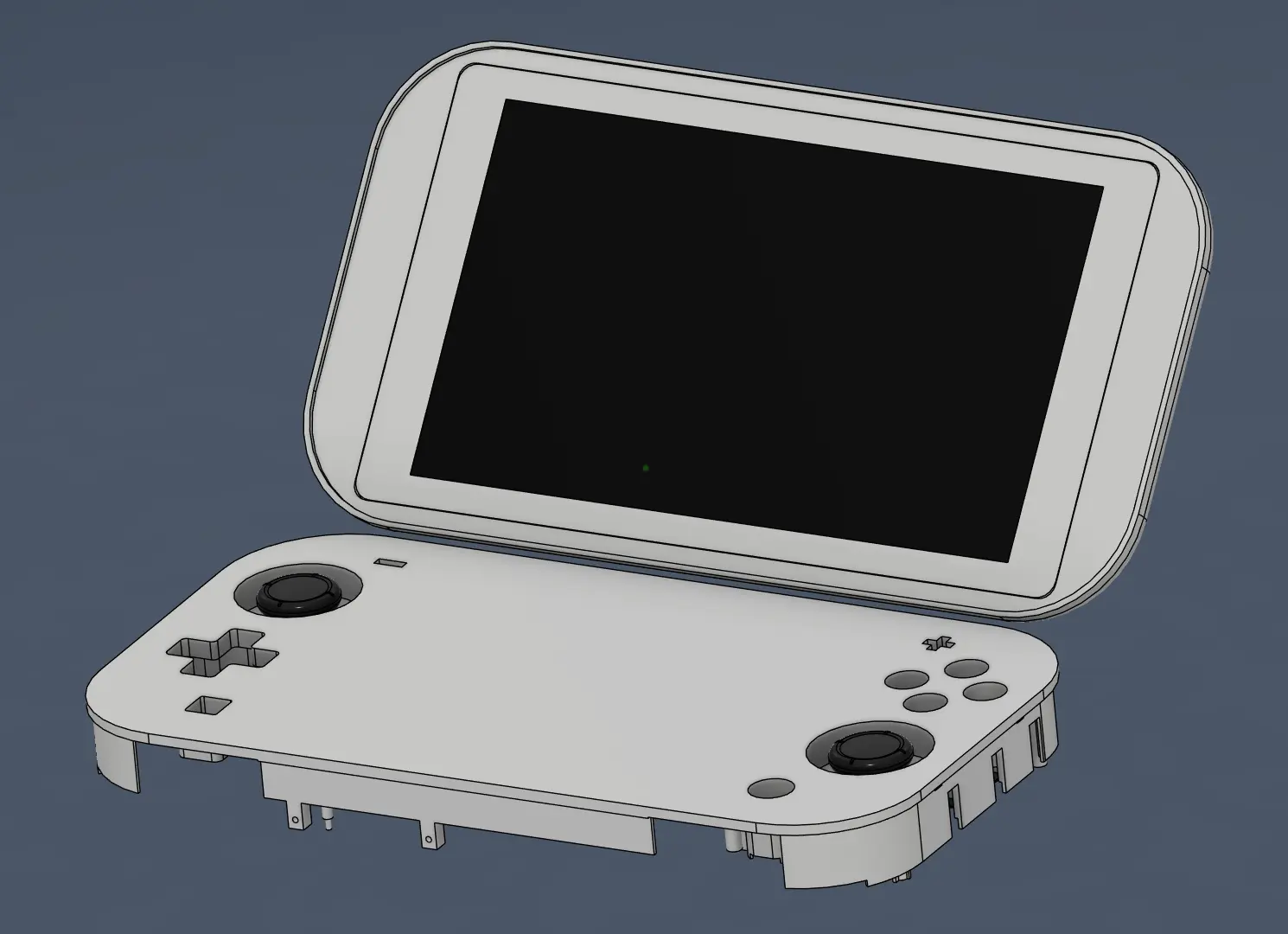
Until my next post, thanks!
This year, I'll be working on a more modern console than I’m used to: the Switch Lite.
I plan to call it either the Switch Lite SP, or the Switch DS Lite
I plan to redesign the console to fit into a clamshell style handheld:
My goal is to have a design that:
- Maintains all major functions of the Switch Lite
- Folds open and closed
- Has similar design features
- Requires no modification to the HDH-CPU Board
- Include compatibility for the Switch Lite OLED mod (If I can get one to take measurements)
- Use a larger battery, space allowing
- Move the speakers to the upper clamshell
- Design that can be CNC machined or 3D printed
This project will mostly focus on the mechanical CAD adaptation, and a few adapter PCBs.
To start, I decided to recreate the Switch Lite parametrically, so that I could easily adapt it to my needs. I leveraged Wesk’s amazing 3D scans to assist with my hand measurements:
With that done, I started modeling some of the other components that would end up determining the overall dimensions. By far the most constraining are the display and the battery.
The OEM Switch Lite is laid out with the mainboard on the right side of the system, stacked with the fan and heat pipes, with the battery to the right of that, and a simple button PCB furthest right:
Source: Ifixit Switch Lite Teardown
I decided to move the battery to ‘below’ the main board (between where the main board and the screen would be) and cut out that length of shell to reduce the overall size. This would reduce the length by ~55mm, but the length of the screen and my goal to keep the rounded corners of the switch lite mean that I can only reduce the length by about 40mm.
Moving the battery in this way results in an increased thickness of about 7mm. This might seem undesirable, but I want to go with the embedded joycon thumbstick design of some recent folding portables. The increased thickness will help make space for the sticks.
This arrangement also increases the space between the face where the buttons are pressed and where the actual button contacts on the PCB rest. For the Main board buttons (the face buttons, plus, and home), I’ll just extend the buttons downward with 3D prints. For the left side buttons (Dpad, minus, and capture), I’ll be creating some custom PCBs that are split up to better match the new locations.
The reduced length leaves no space for the Volume and Power buttons on the upper left, so these will be moved to either the left side, or to above the cartridge slot/fan exhaust.
The upper clamshell will be pretty simple, aside from the hinge. The display has 3 FFCs that I’ll need to bring through the hinge: The digitizer/NFC FFC, the display FFC, and the backlight FFC.
I’m planning another custom PCB that has connectors for all of these FFCs (and maybe for the speakers). I’ll need to length match at least the 5 MIPI lanes on the display FFC, but I’ll likely have space to length match all of the digitizer/NFC and display FFC traces. Each FFC will be routed on their own FFC or custom Flex PCB through the hinge to the connection points on the Mainboard (button board for the backlight).
The hinge will be a mix between the GBA SP design, in that the flexes will route through the middle of the hinge and be covered by another simple shell part, the N2DS XL, and the N3DS XL.
Here’s what I have so far! I’m sure there’s a lot that I’ve described that isn’t straight forward, so hopefully the vision will become clear once I get some more work done:
Until my next post, thanks!