
What did you do different that made it work?I havent tried connecting to the internet yet but the Wii boots every single time so that's all that really matters right.
What did you do different that made it work?I havent tried connecting to the internet yet but the Wii boots every single time so that's all that really matters right.

Kept my wires short and added more ground/3.3v wiresWhat did you do different that made it work?


I'll be doing a lot of extensive testing on this for sure. Should last 2-3 hours probably. Longer than a GCp for sureDamn, quit being such a tease!
That looks really nice! Rough estimate on playtime yet or no?


 ).
).
What do you mean with this?The screen measures current instead of individual button input.
Is it like GND->Switch->Resistor or GND->Resistor->Switch?Yeah it uses a different resistor connected to ground on each screen input
But you said when the button is pressed the voltage will drop to a low input? I need a low button press to trigger a high output to the bluetooth.Ok in this case you can just follow what I said in my previous post (the first think I said)
I think he ment using a DPST button, it has two isolated switches that both activate with the single button press.But you said when the button is pressed the voltage will drop to a low input? I need a low button press to trigger a high output to the bluetooth.
Also dont you need a diode so the screen doesnt register a false button press when you have the pull up resistor?
Oh yeah that would work but my tact switches I have mounted are the standard SPST. I'd rather accomplish this with a circuit.I think he ment using a DPST button, it has two isolated switches that both activate with the single button press.
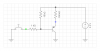
Dunno much, but this may work (Aurelio?)Oh yeah that would work but my tact switches I have mounted are the standard SPST. I'd rather accomplish this with a circuit.
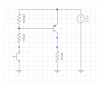
No, it won't work. With that diode the base voltage will always be at 3.3V, replace it with a 1k resistor and use a 10k one as a pull-up.
Also you have to add a resistor load to the collector of your transistor, otherwise after pushing the button and then releasing it the collector voltage will never drop to 0V (ideally, in reality it will take a bit due to leakage currents). Just add a 1k resistor from collector to GND.
![IMG_20160320_174031338_HDR[1].jpg](/forums/data/attachments/0/81-01ccdabc65b401143af3a65ce2b8bf92.jpg?hash=AczavGW0AR)
![IMG_20160321_244933663_HDR[1].jpg](/forums/data/attachments/0/83-5abc12aed89aa61b05f42cf04a44275a.jpg?hash=WrwSrtiaph)