Question Short Between 1.8 V and Ground

Epprot

.
Joined
Oct 20, 2025
Messages
5
Likes
3
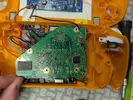
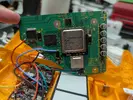
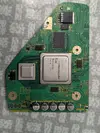
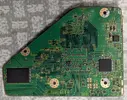
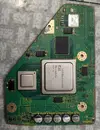
Hey guys, I'm pretty new to Wii portablizing and am building an Ashida. Today I wired up VGA and went to test it only to find a short between 1.8V and Ground. I've disconnected 1.8 from the PMS-Lite and looked around but can't seem to find the short anywhere. Any ideas?
 

Attachments

  • PXL_20260917_024959701.webp
    PXL_20260917_024959701.webp
    2.6 MB · Views: 1
  • PXL_20260917_024933699.webp
    PXL_20260917_024933699.webp
    2.2 MB · Views: 1
Hey guys, I'm pretty new to Wii portablizing and am building an Ashida. Today I wired up VGA and went to test it only to find a short between 1.8V and Ground. I've disconnected 1.8 from the PMS-Lite and looked around but can't seem to find the short anywhere. Any ideas?
Check that solder ball on the 1.8V LDO.Check that solder ball on the 1.8V LDO; it could also be the regulator itself. Try desoldering it and taking the measurement again.
 
I desoldered everything connected to the wii and cleaned up the blob on the LDO as well as some other points but the short remains :(
 

Attachments

  • PXL_20260917_160615329.webp
    PXL_20260917_160615329.webp
    2.1 MB · Views: 1
  • PXL_20260917_160606115.webp
    PXL_20260917_160606115.webp
    1.8 MB · Views: 1
I desoldered everything connected to the wii and cleaned up the blob on the LDO as well as some other points but the short remains :(
One final test is to remove the LDO completely—it might well be the culprit; if you have a bench power supply, you can apply voltage to see if it heats up.
 
Just checking... what's the exact resistance you're measuring between 1.8V and GND, with nothing else connected to the motherboard?

Continuity mode can be deceiving on some multimeters. ~36Ω between 1.8V and GND is normal.
 
One final test is to remove the LDO completely—it might well be the culprit; if you have a bench power supply, you can apply voltage to see if it heats up.
If I remove the LDO would I need to get a new one or something? I only have a PMS-Lite so I can't use it in place of the LDO.
Unfortunately I don't own a power supply either.

Just checking... what's the exact resistance you're measuring between 1.8V and GND, with nothing else connected to the motherboard?

Continuity mode can be deceiving on some multimeters. ~36Ω between 1.8V and GND is normal.
The multimeter says 0.1Ω so I don't think that's the case.
 
make sure there arent any shorts on the edges of the trim, look closely
gonna piggyback off what Archoni said a bit
those board edges look a little blunt, I'd suggest to resand at a slight angle so that you can see a clear distinction between the layers all around the board like this:
image.webp


Can be achieved working through grits 180-> 320-> 600 -> 800 -> 1000+ for example. I personally like to sand up to 2k grit, probably overkill but comes out really smooth and easy to see. Also be sure to tape up the cpu/gpu/ram before, and clean really thoroughly after -especially the sanded edges.

Hopefully this helps solve the short! :)
 
Last edited:
If I remove the LDO would I need to get a new one or something? I only have a PMS-Lite so I can't use it in place of the LDO.
Unfortunately I don't own a power supply either.


The multimeter says 0.1Ω so I don't think that's the case.
Unfortunately, yes—you absolutely need to clear that direct short circuit. If you can replace the LDO with a small regulator, that’s not a problem; we can find a solution, assuming that turns out to be the issue. Of course, first try to determine if the traces themselves are shorted by sanding them down properly and/or inspecting the various layers with a magnifying glass. If everything looks okay, remove the LDO; I think that’s the last "resort".
 
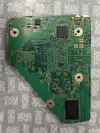
I finally got around to sanding down the edges at an angle and removing the LDO but nothing changed. I sanded with 150 -> 220 -> 400 -> 600 -> 800 -> 1000 -> 1500 -> 2000.
 

Attachments

  • PXL_20260924_194623693.webp
    PXL_20260924_194623693.webp
    1.3 MB · Views: 1
  • PXL_20260924_194534304.webp
    PXL_20260924_194534304.webp
    1.3 MB · Views: 1
something i do is sand with a bit of a curve. i think its harder for it to short that way.
also check for conductive debris on the board you might think its clean but you would be surprised
 
Your resanded mobo looks better, but resanding shouldn't be done blindly. If you download the Compendium you'll notice the 1.8V plane (light green) doesn't even intersect your trim line! So there is no way the board edges could be causing this short.

1790286624206.webp


My money is on a cracked ceramic capacitor. It's rare, but it happens, especially when the board is being handled or soldered to, and they always fail short. If you soldered a 1.8V wire to any small capacitor, remove that capacitor.

More general strategies for resolving stubborn shorts:
  • Wash the board with 91% IPA. Like, soak the whole thing in a bowl of hot IPA for 30min and scrub it hard with a toothbrush. An ultrasonic cleaner is even better, but not required.
  • Remove C4 and C200 in case they're cracked. They aren't needed for the board to work so this is a fast thing to try.
  • Check for other cracked ceramic capacitors (MLCCs) between 1.8V and GND. There aren't that many 1.8V caps on a trimmed board. Besides C4 and C200, there are a few around the AVE and under the Hollywood (check Compendium). Measuring resistance isn't helpful for telling which one is bad, but sometimes the cracks are visible with magnification.
  • Current injection: Use freeze spray or a rosin atomizer pen on all the 1.8V MLCCs. A cracked MLCC will shunt all the current and make itself visible when you apply power to just the 1.8V rail with a current-limited power supply set to ~1A. Example video. Sometimes you can feel the heat from the shorted component with your finger but that's less reliable. Lots of board repair vids on YouTube demonstrating this technique if you need more guidance. Note, most traditional voltage regulators have short circuit protection and won't work for this. A current-limited bench PSU is mandatory.
I've never seen a Wii LDO or AVE fail short, so I would not recommend removing any more active components. Generic LLM advice is extremely unhelpful for this sort of thing, so I'm sorry you're on the receiving end of it. The forums are less active these days.

 
Last edited:
Back
Top