

- Joined
- Dec 5, 2025
- Messages
- 5
- Likes
- 11
What is it?
I am working on a partial PCB reverse engineer of the RVK-01 Wii PCB, with the end goal of creating a very tiny and capable portable. I call it Bwiizness, since eventually I want to make a board (or stack of boards) about the size of a business card that is a fully capable Wii portable. My work is built on the shoulders of the giants who made the RVK-01 compendium, as well as many other very talented and capable members of the BitBuilt forums.
What's the Scope?
For the first pass of this project, I want to make a 4 layer board that can support all the Wii silicon that is hard or impossible to source off the shelf. This includes the Broadway, Hollywood, NAND flash, GDDR3 RAM, MX, AVE, reset supervisors, and connectors for the WiFi and Bluetooth modules. I plan on redesigning the power supply circuitry using a TPS54331 for each rail. I'll pre-emptively make this as compact as possible.
For the second pass, I want to shrink the design and make it portable-friendly. Add a battery charger, a single programmable PMIC with more voltage rails that can do undervolting, an easier to work with video signal (RGB888, MIPI-DSI, etc), and a microcontroller to replace the U9 and U10 reset supervisors.
For the third pass, I want to try and completely replace the MX chip and emulate it with something like an RP2350. The interface between the MX and the Hollywood seems pretty simple, just a SPI connection and some GPIOs. The protocol appears to be pretty well understood too. It would be really cool if I could soup up the Wii with a really capable system monitor. Something capable of monitoring power consumption, handling power states, emulating controllers, and controllable via software on the Wii itself.
What's Been Done?
There is a worm in my brain telling me to reverse engineer things.
Progress Pictures
I am working on a partial PCB reverse engineer of the RVK-01 Wii PCB, with the end goal of creating a very tiny and capable portable. I call it Bwiizness, since eventually I want to make a board (or stack of boards) about the size of a business card that is a fully capable Wii portable. My work is built on the shoulders of the giants who made the RVK-01 compendium, as well as many other very talented and capable members of the BitBuilt forums.
What's the Scope?
For the first pass of this project, I want to make a 4 layer board that can support all the Wii silicon that is hard or impossible to source off the shelf. This includes the Broadway, Hollywood, NAND flash, GDDR3 RAM, MX, AVE, reset supervisors, and connectors for the WiFi and Bluetooth modules. I plan on redesigning the power supply circuitry using a TPS54331 for each rail. I'll pre-emptively make this as compact as possible.
For the second pass, I want to shrink the design and make it portable-friendly. Add a battery charger, a single programmable PMIC with more voltage rails that can do undervolting, an easier to work with video signal (RGB888, MIPI-DSI, etc), and a microcontroller to replace the U9 and U10 reset supervisors.
For the third pass, I want to try and completely replace the MX chip and emulate it with something like an RP2350. The interface between the MX and the Hollywood seems pretty simple, just a SPI connection and some GPIOs. The protocol appears to be pretty well understood too. It would be really cool if I could soup up the Wii with a really capable system monitor. Something capable of monitoring power consumption, handling power states, emulating controllers, and controllable via software on the Wii itself.
What's Been Done?
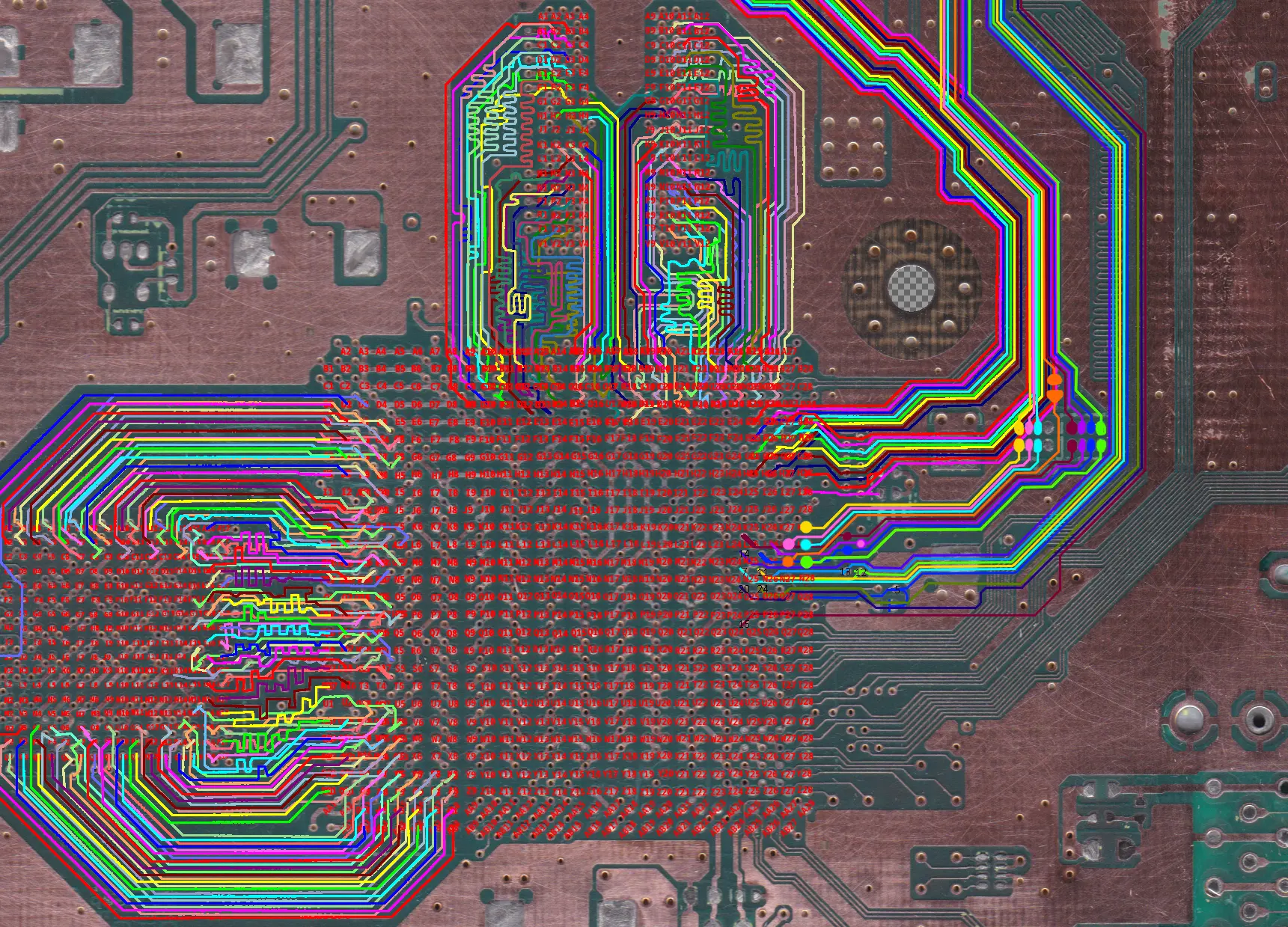
- Traced connections between the Hollywood and Broadway on the RVK-01 Compendium
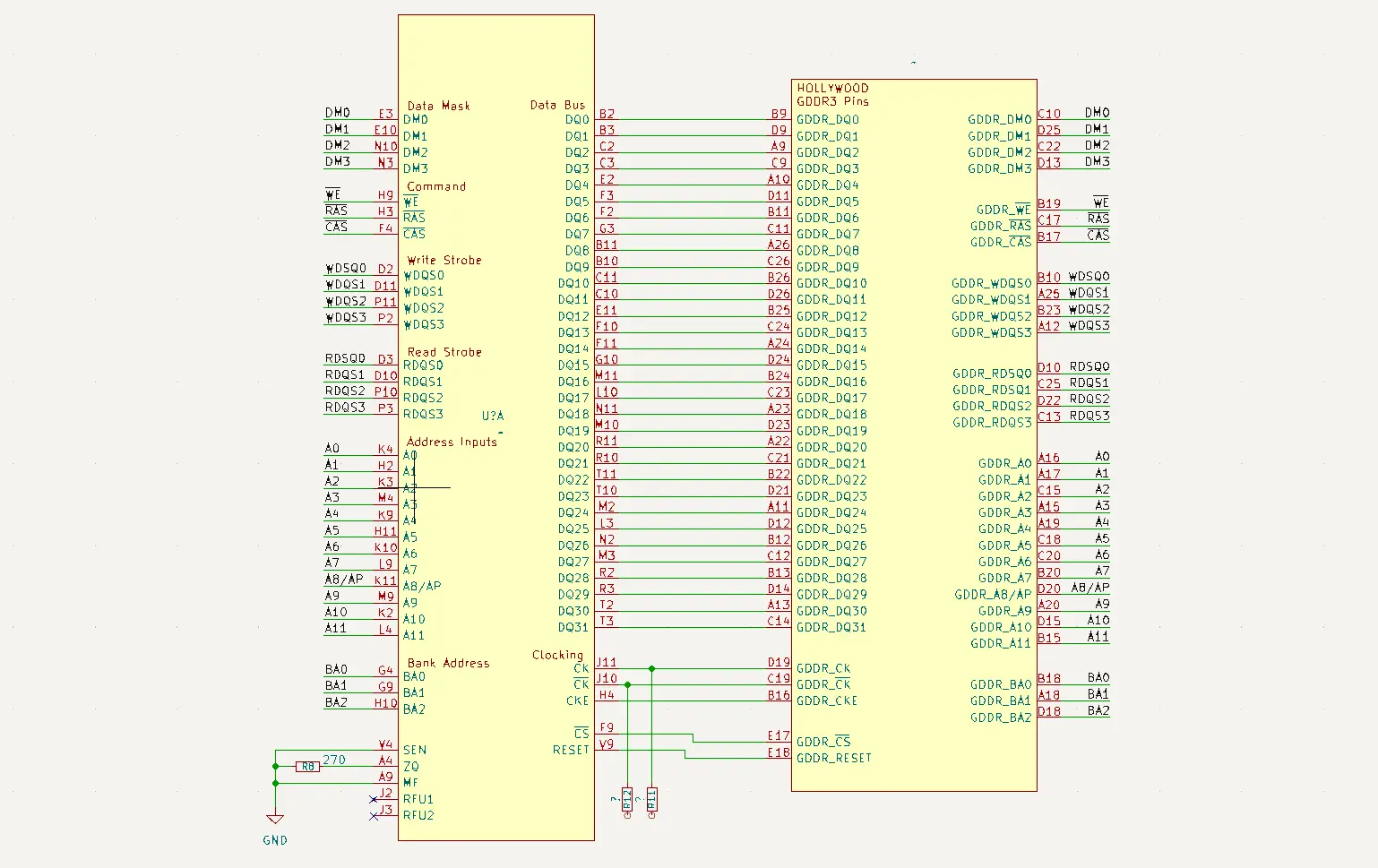
- Traced connections between the Hollywood and GDDR3 on the RVK-01 Compendium
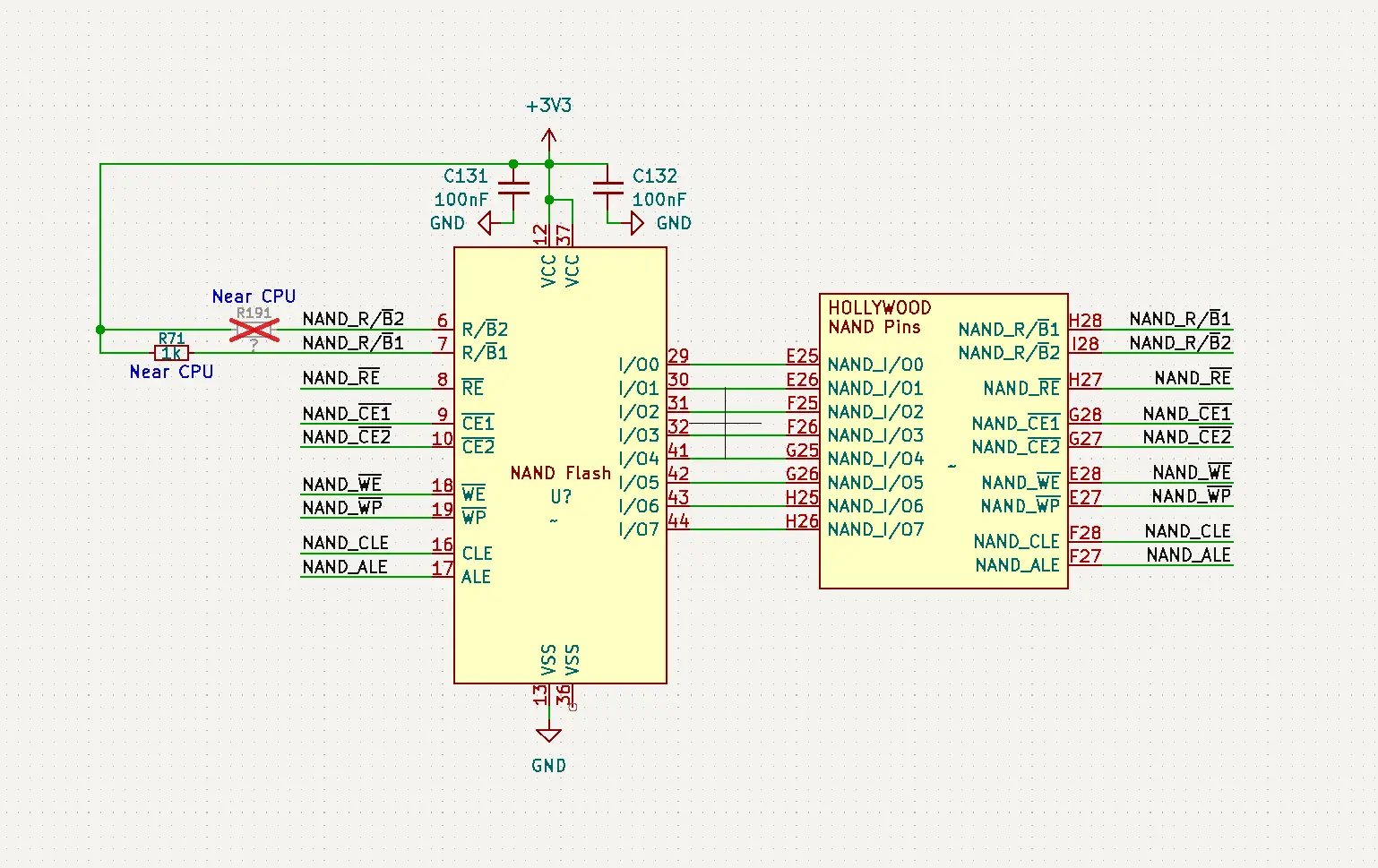
- Traced connections between the Hollywood and NAND Flash on the RVK-01 Compendium
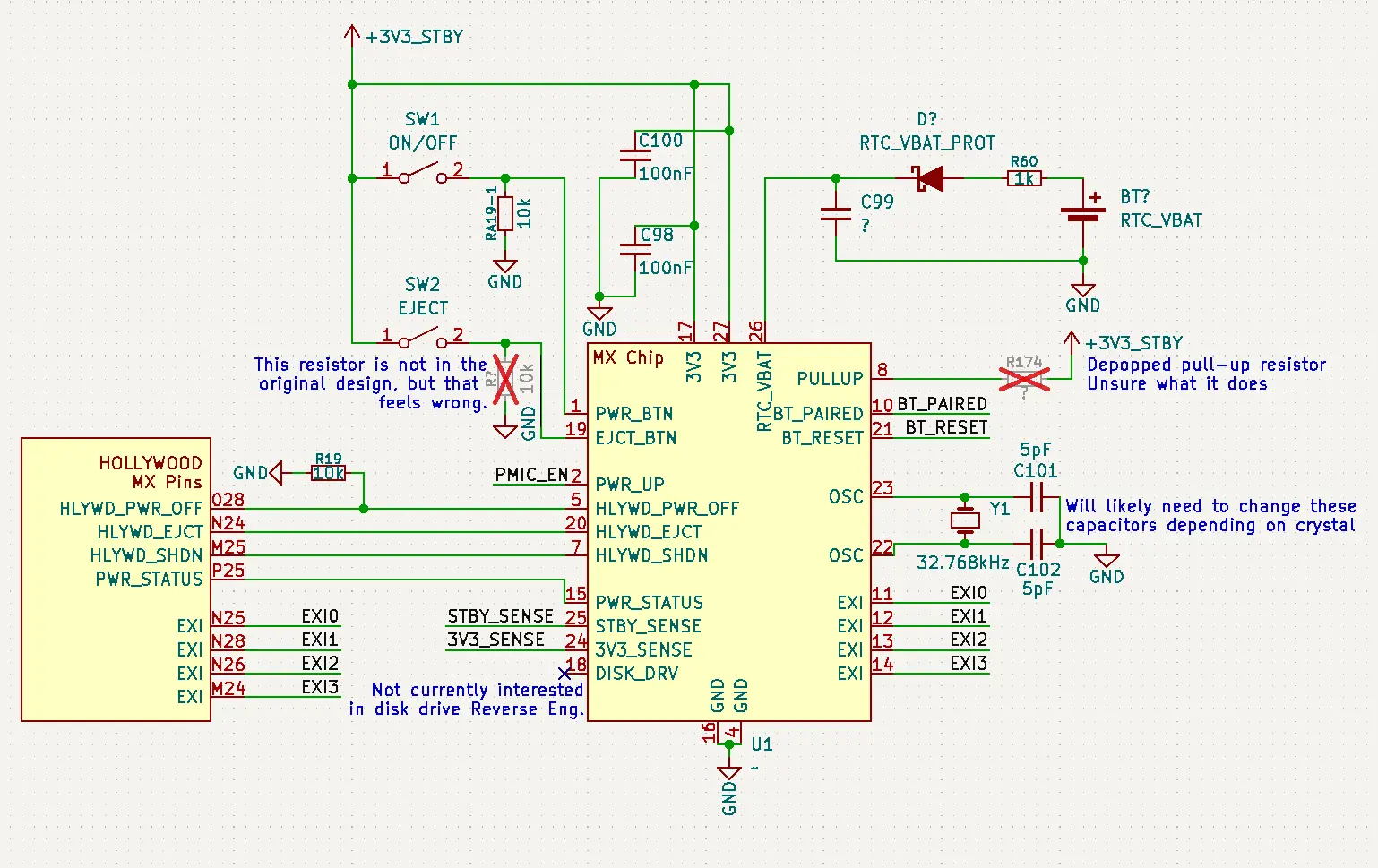
- Filled out the traces for the MX on the RVK-01 Compendium
- Desoldered, checked, catalogued resistor and capacitor values for a couple hundred components. This was already done by someone else, but I wanted to double check the measurements just in case.
- Created a schematic for the MX and supporting components
- Created a schematic for the NAND flash and supporting components
- Created a schematic for the high speed connections between the Hollywood and GDDR3, no supporting components
- Created a partial schematic for the GDDR3 power rails and various supporting components. This is what I am currently working on
There is a worm in my brain telling me to reverse engineer things.
Progress Pictures


