

Question on damaged games

vivi22

.
Joined
Jul 1, 2026
Messages
4
Likes
2
I was gifted some damaged DS and 3DS games and it got me wondering. There are multiple duplicates of the same games like Nintendogs. Is it possible to replace the ROM of damaged game (bad rom good board), by putting in an identical ROM from a donor (good rom bad board), if it was soldered correctly then can it merge into one functional copy?

The other question I'm not so sure about, but what if let's say you legally own a legit physical Pokemon game but it flakes out (like how ORAS copies were spontaneously dying) can you theoretically go buy a compatible blank ROM chip if you can flash it with your own backup of your game, and just go solder it in place of the one that died and you could keep your save data from on the card (since the board and other storage chip is still the old one)? I assume you can only write the blank ones, one time. But is even that, possible?

So basically keeping 90% of your game but just, replacing the parts that are broken (or swapping). Is any of that even possible?
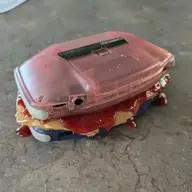
 
yes you can swap parts across boards if the parts are the same.

you can replace a rom chip with a new one but thats the point most people consider it to no longer be an authentic copy. at that point you might as well just run an R4 card
 
I was gifted some damaged DS and 3DS games and it got me wondering. There are multiple duplicates of the same games like Nintendogs. Is it possible to replace the ROM of damaged game (bad rom good board), by putting in an identical ROM from a donor (good rom bad board), if it was soldered correctly then can it merge into one functional copy?

The other question I'm not so sure about, but what if let's say you legally own a legit physical Pokemon game but it flakes out (like how ORAS copies were spontaneously dying) can you theoretically go buy a compatible blank ROM chip if you can flash it with your own backup of your game, and just go solder it in place of the one that died and you could keep your save data from on the card (since the board and other storage chip is still the old one)? I assume you can only write the blank ones, one time. But is even that, possible?

So basically keeping 90% of your game but just, replacing the parts that are broken (or swapping). Is any of that even possible?

In the case of the DS, unfortunately it's not that simple. DS games use mask ROMs, not programmable flash chips or EEPROMs (they do for save but not for game data). Mask ROMs embed game data in silicon, they're made at the chip fab to be that specific game and only that game, so unfortunately there are no blank DS ROM chips or any way to program them.

Now if the cartridges are dead due to PCB damage (corrosion or otherwise) but the ROM chips are good, you 100% can transplant the chips onto a donor board or even a brand new PCB. Unfortunately there is no way around IC damage for the DS, you'd have to use a flash cartridge to play those games or get a new, working copy.
 
In the case of the DS, unfortunately it's not that simple. DS games use mask ROMs, not programmable flash chips or EEPROMs (they do for save but not for game data). Mask ROMs embed game data in silicon, they're made at the chip fab to be that specific game and only that game, so unfortunately there are no blank DS ROM chips or any way to program them.

Now if the cartridges are dead due to PCB damage (corrosion or otherwise) but the ROM chips are good, you 100% can transplant the chips onto a donor board or even a brand new PCB. Unfortunately there is no way around IC damage for the DS, you'd have to use a flash cartridge to play those games or get a new, working copy.
Thank you that is very interesting, is that also the case for the 3DS ones or just for the DS ones?
 
Thank you that is very interesting, is that also the case for the 3DS ones or just for the DS ones?

Same sort of deal, yeah.
 
Thank you. Could I ask one more question, if you don't mind? I would like to better understand how that limitation works at like a broader PCB design kind of way. Like if I have a Pokemon Omega board and it has a Pokemon Omega mask ROM chip. Then it has how-ever-many pins going into the board for the read operations, and like a voltage and stuff. What I was hoping to better understand is like, if some other style of ROM or EEPROM or what have you, is the exact same # of pins, and the pitch between, and like voltage, and 0's and 1's written onto it, then it still would reject it like a bad organ donor match right?

But is it a signature or a security thing in it, or somehow the PCB "knows" that it is a pre-cooked-onto version of 001001 as opposed to some other version of otherwise identical 001001. Like I get that it can't be a different game, it will only accept Omega, that part makes total sense. But how does it know or require it to have that one specific type of storage if of all of the other features of it are the same? (we are pretending there is just a convenient, off the shelf clone of the exact same pins and size and so on, but just a different storage type)

I have tried to research this type of thing before and articles and AI are just not getting the answer to click for me, so it is very much appreciated that you are helping me to better understand this. I hope I have asked this part of it the right way, since I don't know quite what I don't know, I might be asking it kind of poorly.
 
Back
Top